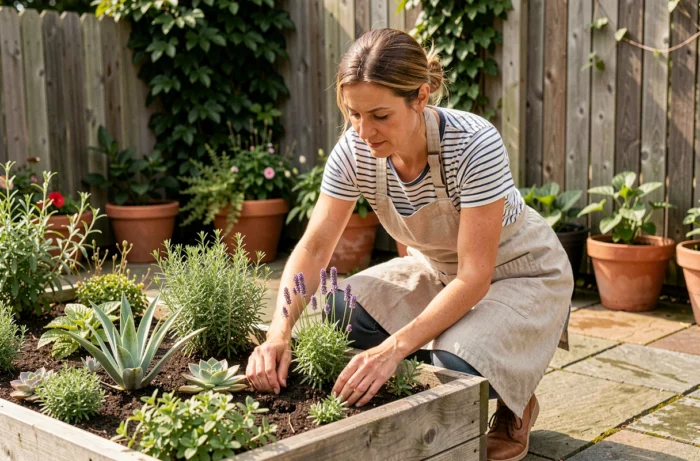
What parameters really distinguish an easy-to-maintain garden from a green space that requires several hours of care each week? The answer lies less in the number of tips applied than in the style of garden chosen from the outset. According to the agency La Passion du paysage, the three most requested styles in France for the period 2024-2026 are the ecological garden, the contemporary garden, and the dry garden, the latter being presented as the easiest to maintain.
Dry garden, ecological garden, and flower meadow: maintenance comparison
The choice of style determines the maintenance burden throughout the lifespan of the layout. A classic lawn requires regular mowing, substantial watering, and frequent weeding. Alternatives are gaining ground because they reduce each of these aspects, but not in the same proportions.
| Criterion | Dry garden | Flower meadow | Classic lawn |
|---|---|---|---|
| Watering | Almost none after establishment | Low (natural rain) | High (several times a week in summer) |
| Mowing / cutting | None | One to two cuts per year | Weekly from March to October |
| Weeding | Limited by mineral mulch | Limited by seed density | Frequent (weeds in low areas) |
| Installation cost | Medium to high (gravel, drought-resistant plants) | Low (direct seeding) | Low to medium (seeding or turfing) |
| Overall maintenance level | Minimal | Minimal to medium | High |
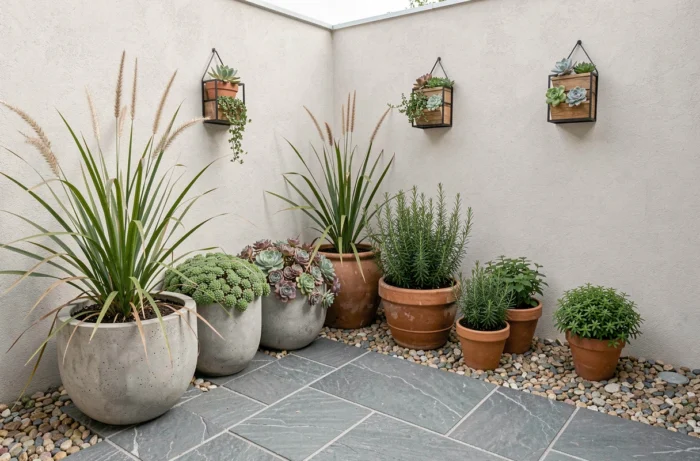
The dry garden eliminates almost all watering thanks to drought-resistant plants and mineral mulches that slow evaporation and weed growth. The flower meadow, identified by La Passion du paysage as a key trend for 2024-2025, positions itself as the signature of the natural garden with maintenance reduced to one or two cuts per year.
Specialized resources like instant-jardin.fr gather practical sheets to guide the choice between these styles based on soil type and exposure.
Water restrictions and regulations: the factor that gardeners underestimate
The watering gap between a classic lawn and a dry garden takes on a regulatory dimension during dry periods. For several summers, prefectural orders have limited or prohibited the watering of ornamental gardens in many French departments.
In a crisis situation (the highest level of restriction), the ban covers lawns, ornamental gardens, and even some vegetable gardens. Offenders face a fine of up to 1,500 euros for prohibited watering.
The use of a private well does not exempt one from these rules. A property owner who waters with well water remains subject to the prefectural restrictions in effect in their municipality. The government platform VigiEau allows real-time verification of the applicable restriction level for each address.
Rainwater harvesting: a mandatory declaration
Installing a rainwater harvesting tank to supply the garden seems logical. However, this process requires a declaration at the town hall as soon as the installation is connected to the sewage system or used inside the dwelling. Ignoring this obligation can result in a significant fine.
A garden designed from the outset to function without regular watering (dry garden, meadow, drought-resistant ground covers) neutralizes this regulatory risk. The choice of planting style then becomes as much a legal decision as an aesthetic one.
Mulch and ground covers: reducing weeding without chemicals
Weeding represents the most time-consuming maintenance task after mowing. Two complementary approaches can sustainably limit it.
- The mineral mulch (gravel, pumice, crushed slate) retains its effectiveness for several years without renewal, blocks light at the soil level, and slows the germination of weeds. It naturally pairs with the dry garden.
- The organic mulch (wood chips, bark, dead leaves) nourishes the soil as it decomposes but requires annual renewal. It is better suited for perennial beds and the bases of shrubs.
- Persistent ground cover plants (thyme, sedum, ground ivy) form a dense mat that physically prevents weeds from establishing while eliminating the need to mow the covered area.
Combining mineral mulch in pathways and ground covers in beds creates a garden where weeding is limited to a few occasional interventions per season.
Soil and exposure: two factors that determine actual maintenance time
Clay soil retains water but compacts at the surface, promoting moss and stagnant puddles. Sandy soil drains quickly but dries out roots in summer. Adapting plants to the existing soil rather than constantly amending it reduces labor in the long term.
Mediterranean plants (lavender, rosemary, rockrose) thrive in draining soil and full sun. Placing them in heavy, shaded soil requires draining, amending, and monitoring moisture, which negates any expected maintenance gain.
Adapting the landscaping project to the terrain
Before choosing a garden style, a simple test involves digging a thirty-centimeter hole, filling it with water, and observing the drainage speed. Soil that takes more than an hour to drain water points towards wetland plants (astilbe, hosta) rather than a dry garden.
The choice of plants dictated by the soil reduces planting failures and costly replacements. A landscape design calibrated to the actual conditions of the terrain requires fewer corrections later than a project copied from a catalog.
The most reliable parameter for estimating the maintenance burden of a garden remains the soil-exposure pair, well before the number of plants or the area. A dry garden on draining soil in full sun requires less work than a twenty-square-meter lawn on clay soil in the shade. Emerging styles like the flower meadow and the ecological garden confirm this logic: they start from the terrain as it is, rather than fighting against its characteristics.