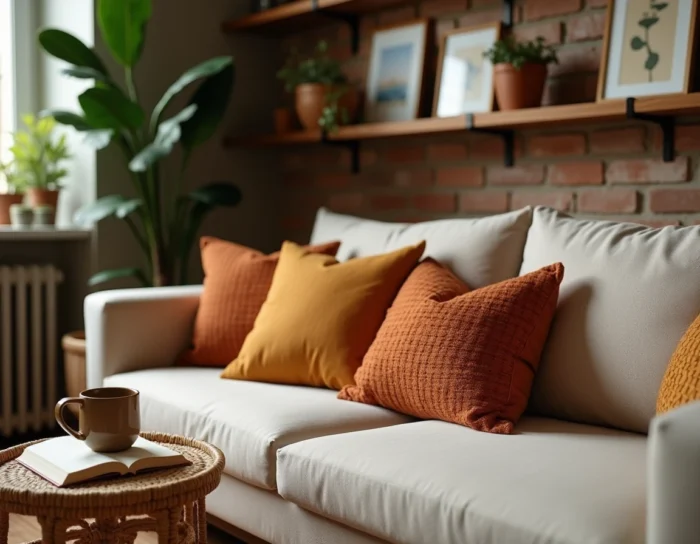
A sofa too large for the room, a coffee table blocking the passage to the kitchen, an improvised telecommuting corner on a piece of countertop: we have all experienced at least one of these situations. Transforming your interior into a unique and warm space does not necessarily require a complete renovation. Often, it’s a matter of concrete choices regarding layout, materials, and light.
Modular furniture: adapting a room for multiple uses without breaking down a wall
When working from the living room, dining there in the evening, and hosting on weekends, a fixed configuration quickly shows its limits. Modular furniture addresses this issue head-on: a sofa with movable elements, an extendable table that transitions from desk to dining table, repositionable shelves that serve as temporary dividers.
The main advantage is to not freeze the layout of a room for a single use. You gain usable space without altering the structure. Mobile partitions, made of wood panels or thick fabric stretched on a rail, allow you to create a closed office corner during the day and return to an open living room in the evening.
Before purchasing, measure the minimum circulation space between each piece of furniture (consider the width of a comfortable passage, about that of two shoulders). A poorly sized modular piece clutters just as much as a traditional piece. To explore other layout options, you can discover the Media Libre home page which gathers additional resources on the subject.

Sustainable and traceable materials for long-lasting interior decoration
The usual reflex when wanting a warm interior is to turn to wood, linen, and rattan. Choosing the raw material is not enough. What makes a difference is the ability to repair, maintain, and keep a piece of furniture over time.
Sustainable decoration involves traceability and reparability, not just the “natural” label. A solid oak table top that can be sanded and re-oiled every five years ages better than a veneered panel that is discarded at the first chip.
Concrete criteria for evaluating a piece of furniture before purchase
- Assembly: visible and accessible screws allow for tightening or replacing a part, unlike permanent glues that make any repair impossible
- The origin of the wood or textile: a manufacturer able to name the source of their materials (species, region, supply chain) offers more guarantees than a vague mention of “natural material”
- The finish: oil or wax can be easily renewed with regular maintenance, while industrial varnish requires complete sanding once damaged
On this point, feedback varies according to manufacturers and price ranges. Testing the sturdiness in-store (pressing on corners, opening and closing drawers several times) remains the most reliable action.
Biophilic design: integrating vegetation into space design
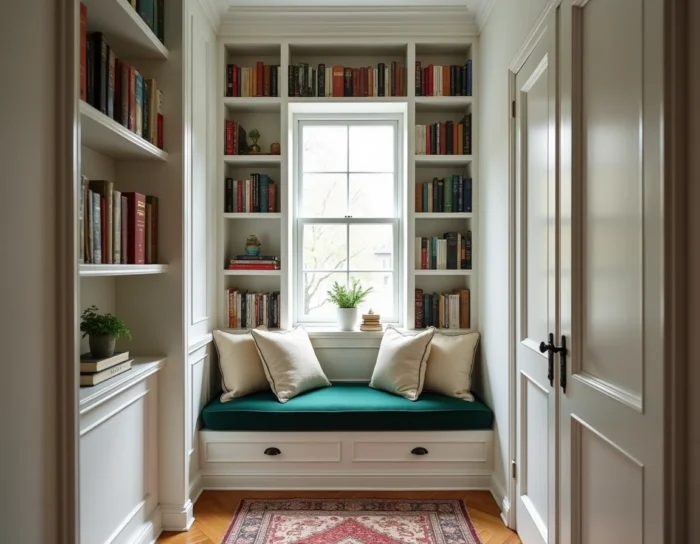
Placing three pots on a windowsill is a start. Biophilic design goes further by integrating plants into the very architecture of the room. Built-in planters in low furniture, open shelves designed to accommodate trailing plants at eye level, or wooden screens covered with climbing ivy to separate two areas of the living room.
The goal is not decorative in the classical sense. The aim is to strengthen the connection with natural light and introduce organic shapes that break the rigidity of straight lines. A low planter placed under a window visually extends the outside to the inside, especially in an apartment without a balcony.
Practical constraints to anticipate
Watering remains the number one problem. An indoor vertical garden without an automatic irrigation system becomes a chore within weeks. For small spaces, it’s better to choose low-water plants (pothos, sansevieria, zamioculcas) placed in containers with water reservoirs.
Checking the light exposure of each location before choosing species avoids the disappointment of a ficus wilting in a north-facing hallway. A smartphone app lux meter provides a sufficient indication for domestic use.
Layered lighting: creating a living room ambiance without a single ceiling light
A central ceiling light illuminates everything uniformly and flatly. To add depth and warmth to a room, three levels of light are layered.
- Ambient light: a floor lamp directed towards the ceiling or an indirect LED strip behind a piece of furniture, with a warm color temperature (around 2700 K)
- Functional light: desk lamp, adjustable arm reading lamp near the sofa, under-cabinet lighting in the kitchen
- Accent light: adjustable spotlight on a painting, discreet string lights on an open shelf, candle placed on a coffee table
Multiplying low-intensity light sources effectively replaces a single powerful light point. It creates soft shadow areas that add depth to the living room or dining area. A dimmer on the main circuit allows for ambiance adjustment without changing bulbs.
The choice of wall color directly influences the lighting effect. A terracotta or dark beige wall absorbs more light than an off-white wall. If opting for bold shades, compensate with an additional light source in the concerned area.
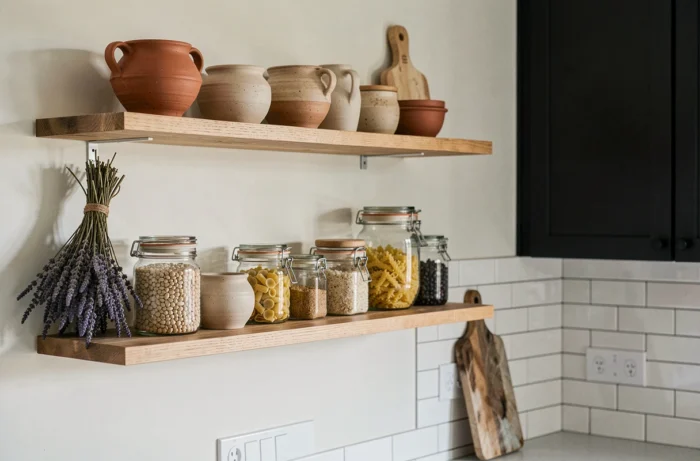
Transforming an interior does not require changing everything at once. Starting by reorganizing the circulation in the main room, then adjusting the lighting and gradually introducing materials and plants yields concrete results without a renovation budget. The most effective approach remains addressing a specific irritant (the blocked passage, the dark corner, the useless piece of furniture) rather than aiming for a global redesign that often ends up in a Pinterest folder never realized.